Pump Track vs Skatepark: What's the Difference?
If you're looking for a place to ride a BMX bike, mountain bike, scooter, or skateboard, you may come across both pump tracks and skateparks. At first glance, they can seem similar. However, many cyclists prefer the endless rhythm circuits found at pump tracks in British Columbia and pump tracks in Alberta.
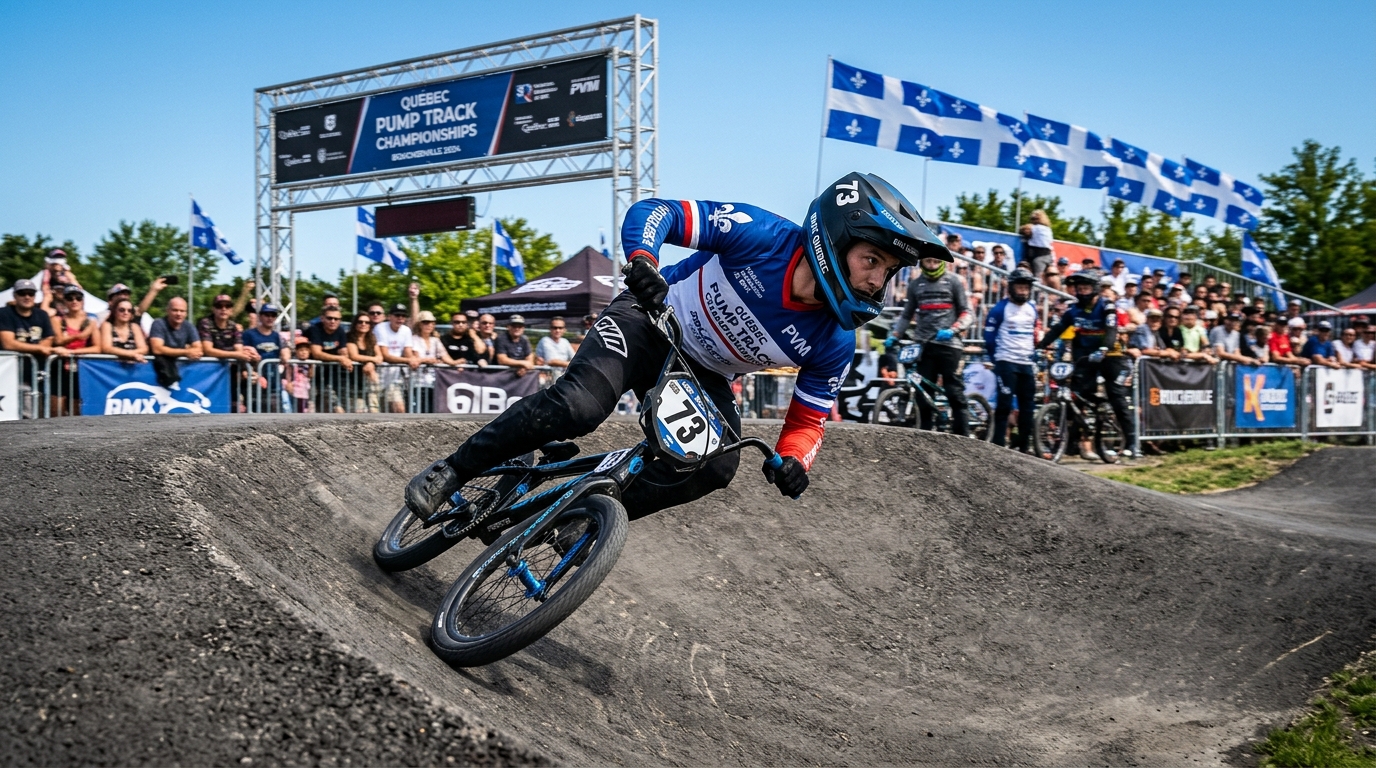
The experience, however, can be very different.
A pump track is primarily designed around continuous movement. Riders use rollers, berms, and transitions to maintain momentum and move around a circuit. A skatepark usually provides a collection of individual features — such as ramps, bowls, rails, ledges, and other obstacles — that riders use to practise tricks, lines, jumps, and different forms of technical riding.
Neither is necessarily better than the other. The right choice depends on what you want to practise, what equipment you ride, and what the individual facility allows.
What Is a Pump Track?
A pump track is a closed circuit built around rollers and banked turns, commonly called berms. The layout is designed so riders can maintain movement around the track by shifting their body weight rather than relying continuously on pedalling.
The defining skill is pumping.
As the rider moves through the track, body movements are coordinated with the changes in elevation. Riders can generate and maintain momentum by working with the terrain instead of simply pedalling along a flat surface.
Pump tracks can be built from different materials, including paved pump tracks in Ontario and community dirt pump tracks in Quebec. Their layouts also vary considerably. Some are relatively simple and suitable for beginners, while others include larger rollers, steeper turns, jumps, or more technical sections.
Because every facility is different, riders should check local rules. Read our pump track rider checklist before heading out.
What Is a Skatepark?
A skatepark is generally designed around individual obstacles and riding areas rather than one continuous pumping circuit.
Depending on the facility, a skatepark may contain features such as:
- Quarter pipes
- Banks
- Bowls
- Ramps
- Rails
- Ledges
- Stairs
- Transitions
- Other purpose-built obstacles
Skateparks can accommodate different types of riders, including skateboarders, BMX riders, and scooter riders, depending on the rules of the specific facility.
The riding style is often more focused on tricks, jumps, lines, transitions, and technical manoeuvres.
Some skateparks are relatively open and beginner-friendly, while others contain complex features intended for experienced riders. Looking at photos and checking the facility rules before your visit can help you decide whether a particular skatepark is appropriate for your experience level.
Pump Track vs Skatepark: The Main Difference
The simplest distinction is this:
A pump track is designed around a continuous circuit, while a skatepark is generally organized around individual riding features.
On a pump track, you typically follow the layout of the track. The goal may be to complete laps while maintaining flow and momentum.
At a skatepark, you usually have more freedom to choose which feature to approach and how to combine different obstacles into a line.
That difference changes the way each facility is used.
A beginner learning body positioning and momentum may find a simple pump track easier to understand than a skatepark filled with ramps and obstacles. On the other hand, someone specifically interested in learning skateboard tricks may get much more value from a skatepark.
Which Is Better for Learning Bike Control?
Both can help develop riding skills, but they emphasize different techniques.
A pump track naturally encourages riders to practise balance, weight transfer, cornering, body positioning, momentum control, looking ahead, and smooth transitions.
Because the same sequence of rollers and turns can be repeated over multiple laps, riders can practise the same movement again and again.
A skatepark can develop a different set of skills, particularly when riders use ramps, transitions, jumps, or other obstacles. It can also provide opportunities to work on more specialized techniques.
For someone completely new to action sports, a simple pump track can be a useful environment for becoming comfortable with basic bike handling before moving toward more technical riding.
Can You Ride a BMX at Both?
In many cases, BMX bikes can be used at both pump tracks and skateparks, but the rules are determined by the individual facility.
A BMX designed for park riding may feel different from a bike set up primarily for racing or pump-track use. However, the important consideration is not simply whether a bike can physically ride the facility.
Always check the posted rules.
Some locations may restrict certain equipment, specify helmet requirements, establish age restrictions, or have other rules intended to manage traffic and safety.
Never assume that because one facility permits a particular type of bike, another facility will do the same.
What About Mountain Bikes?
Mountain bikes can be suitable for some pump tracks, particularly larger layouts, but the ideal bike depends on the design of the track and its rules.
A mountain bike can also be used in certain skateparks, but again, the facility may have restrictions concerning tire type, bike size, or permitted equipment.
Before travelling, check the individual listing and the facility's official information where available. This is particularly important if you're planning a longer trip. Finding out that your preferred bike isn't permitted after arriving can turn an otherwise enjoyable outing into a wasted journey.
What About Scooters?
Scooters are another area where rules vary.
Some pump tracks are designed as multi-use facilities and may allow scooters alongside bikes. Others may be intended specifically for bicycles.
Skateparks frequently accommodate scooters, but this should also be confirmed before visiting.
If you're planning a family outing and several people will be using different equipment, checking the rules in advance becomes even more important.
Which Is Better for Kids?
There isn't one universal answer.
A young rider who is learning balance and basic bike control may enjoy a small, straightforward pump track. The continuous layout can make it easier to concentrate on steering, speed, and body movement.
Another child may be more interested in a scooter or skateboard and prefer the variety of features found at a skatepark.
The most important factors are the child's experience level, the facility's design, and its rules.
Parents should look for information about permitted equipment, helmet requirements, age recommendations, operating hours, and the difficulty of the facility before visiting.
It's also worth considering how busy a location is likely to be. A crowded facility can be more difficult for a nervous beginner to navigate.
Can You Learn Pump Track Skills at a Skatepark?
Some skills overlap, but a skatepark does not necessarily provide the same environment as a pump track.
Transitions at a skatepark can help riders become comfortable with changing terrain, while ramps and banks can provide opportunities to practise balance and weight distribution.
However, a pump track is specifically designed around the relationship between rollers, berms, and continuous movement.
If your primary objective is learning how to pump, maintaining flow, and carrying speed around a circuit, practising on a pump track is generally more directly relevant.
Can a Pump Track Help Before Visiting a Skatepark?
Absolutely.
For riders who are new to BMX or action sports, a pump track can provide a controlled environment for developing basic bike-handling skills.
Learning to look ahead, maintain balance, shift body weight, and control speed can make future riding experiences more comfortable.
That doesn't mean you need to master a pump track before visiting a skatepark. Beginners can start at either type of facility as long as they choose an appropriate location and follow the rules.
How to Decide Where to Ride
Before choosing between a pump track and a skatepark, ask yourself what you actually want to do.
Choose a pump track if you want to practise pumping, work on bike handling, improve cornering, ride continuous laps, develop balance and body positioning, and build confidence on rollers and berms.
A skatepark may be more appropriate if you want to practise tricks, ride ramps and transitions, work on jumps, combine different obstacles into lines, develop skateboarding or scooter skills, and explore technical features.
You don't necessarily have to choose one permanently. Many riders enjoy both because each type of facility develops different aspects of their riding.
Check the Facility Before You Go
One of the biggest mistakes beginners make is assuming that every pump track or skatepark is built for the same type of riding. They're not.
Track size, surface, feature design, permitted equipment, opening hours, and safety rules can all vary.
Before heading out, check the individual location for surface type, photos, address, permitted equipment, helmet requirements, operating information, age restrictions, and nearby amenities.
The findpumptracks.ca can help you discover pump tracks by province and city, making it easier to compare locations before you travel.
Frequently Asked Questions
Find a Pump Track in Canada
Whether you're learning to ride, improving BMX skills, introducing a child to cycling, or simply looking for a new place to practise, understanding the difference between a pump track and a skatepark can help you choose the right facility.
Browse pump tracks by province and city in the findpumptracks.ca and compare individual locations before your next ride.