Pump Track Etiquette: The Complete Guide to Riding Safely Around Others
A pump track may look simple from the outside, but once several riders are using it at the same time, understanding how to share the space becomes extremely important.
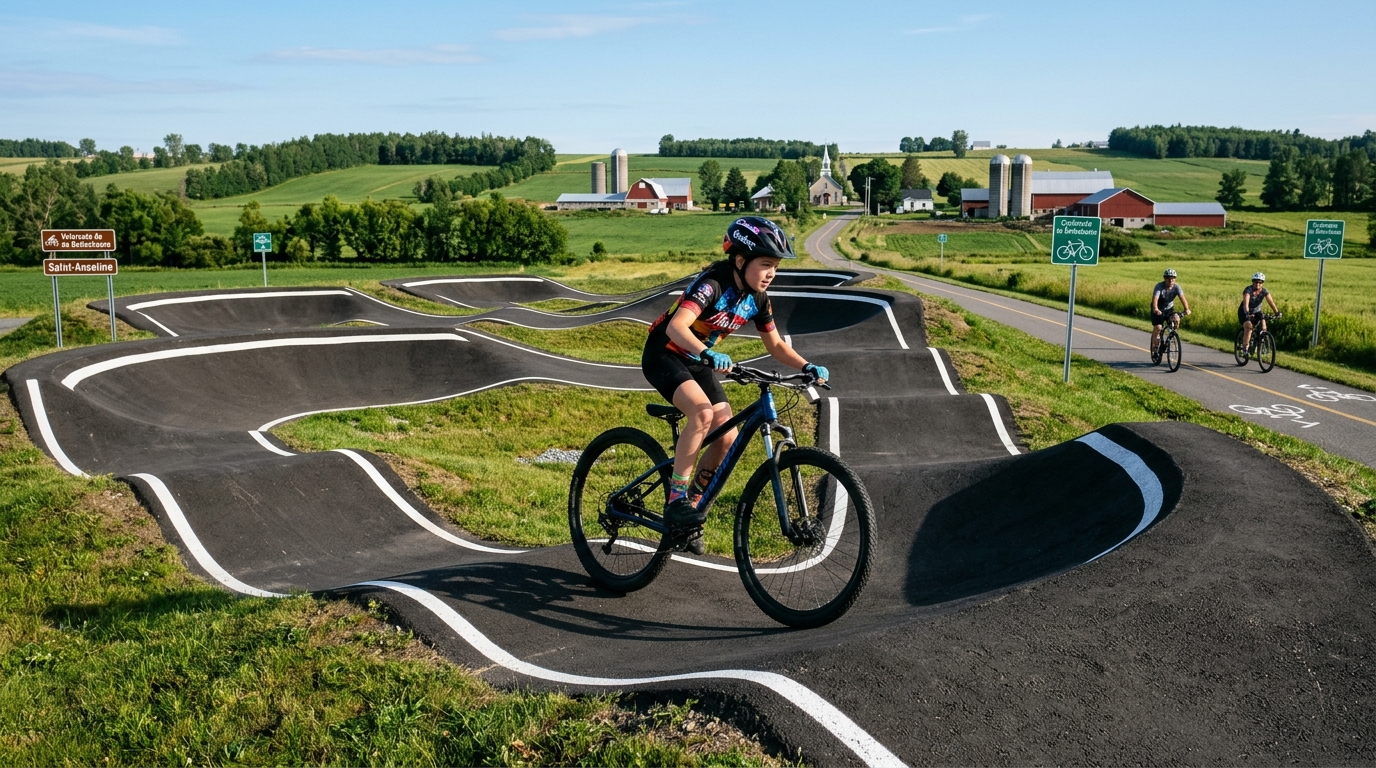
Unlike a traditional bike path, a pump track often has a compact layout where riders travel through the same rollers, berms, and transitions repeatedly. Cyclists, scooter riders, children, beginners, and experienced riders may all be using the same facility.
Good pump track etiquette helps everyone enjoy the track while reducing unnecessary conflicts and avoiding situations where one rider's mistake affects someone else.
There isn't one universal set of rules for every pump track in Canada (with premier pump tracks in British Columbia and pump tracks in Alberta). Individual municipalities and facilities may establish their own requirements concerning helmets, permitted equipment, direction of travel, age restrictions, operating hours, or other conditions.
The posted rules at the facility always take priority.
However, there are several basic principles that can make almost any shared pump track safer and more enjoyable.
Check the Rules Before Riding
The first part of good etiquette happens before you even enter the track.
Take a moment to read the signs at the entrance or around the facility.
Look for information about:
- Permitted equipment
- Helmet requirements
- Direction of travel
- Age restrictions
- Opening hours
- Special sessions or scheduled use
- Closed sections
- Other safety requirements
Rules can differ significantly between locations.
A pump track that allows bicycles and scooters, for example, may have different traffic patterns from a facility intended primarily for bikes.
Never assume that a rule from your local track applies everywhere else.
If you're visiting a new facility, treat the first few minutes as an opportunity to understand how that particular location operates.
Watch Before You Enter
One of the simplest ways to avoid problems is to observe the track before joining the riding line.
Watch how riders are moving.
Which direction are they travelling?
Where are people entering?
Where are they exiting?
Are there particular sections where riders tend to slow down?
Is there a separate area for beginners or younger children?
You can learn a surprising amount simply by standing beside the track for a few minutes.
This is particularly useful for beginners who may feel overwhelmed by a busy circuit.
There's no need to rush onto the track just because you have arrived.
Understanding the flow first can make your first lap much more comfortable.
Wait for a Safe Opening
When the track is busy, don't immediately enter because there appears to be a small gap.
Look at the riders already on the circuit and consider how quickly they are moving.
A rider may appear far away at one moment and reach your section much faster than expected.
Wait for a sufficiently clear opportunity to enter.
This is especially important for children.
Young riders may not yet be able to judge speed and distance accurately, so parents should help them understand when it is safe to enter.
Maintain a Safe Distance
Once you're riding, avoid following another rider too closely.
The rider ahead may slow down, make a mistake, lose balance, or stop unexpectedly.
A little extra space gives you time to react.
The appropriate distance depends on the speed, layout, and number of people using the track.
There isn't a single measurement that works for every situation.
The important principle is simple:
Never ride so close that you cannot safely react to the rider in front of you.
This becomes particularly important when riding behind children or beginners, whose speed and line may change unexpectedly.
Don't Assume the Rider Ahead Knows You're There
A common mistake is assuming that a faster rider has priority simply because they are approaching from behind.
The rider ahead may not hear you.
They may be concentrating on the next roller or corner.
They may also be a beginner who isn't comfortable changing their line.
Don't rely on shouting at the last second to make someone move.
Instead, leave enough space and wait for an appropriate opportunity.
If the facility has established passing practices, follow them.
If there is no clearly defined passing procedure, prioritize predictable riding and avoid forcing another person off their line.
Passing Requires Good Judgment
Passing another rider can be appropriate when the layout and conditions make it safe.
But a pump track is not a race unless the facility specifically organizes one.
There is rarely a good reason to force a pass through a narrow berm or approach a slower rider aggressively.
If you are significantly faster than someone ahead, patience is part of good etiquette.
Wait until there is enough room and visibility to pass without creating a dangerous situation.
Never assume that another rider will move simply because you are faster.
Beginners Need Space Too
Experienced riders sometimes forget what their first sessions felt like.
A beginner may ride slowly, stop unexpectedly, take an unusual line, or hesitate before entering a feature.
That doesn't necessarily mean they're doing something wrong.
They are learning.
Give less experienced riders room to develop their skills.
If you're comfortable riding faster, you can often choose a less crowded time or location rather than expecting every other person to match your pace.
A pump track is a shared recreational facility, not a private training circuit.
Give Children Extra Room
Children may behave unpredictably while learning.
They may suddenly brake, change direction, stop to look at a feature, or lose balance.
When riding behind a child, increase your following distance.
If you're supervising a child, explain the importance of continuing in the correct direction and avoiding sudden stops in the middle of the riding line.
Parents should also avoid standing in places where they could become an obstacle for riders.
If you need to help your child, move to a safe area away from the main riding line whenever possible.
Don't Stop in the Middle of the Track
Stopping is sometimes necessary.
You may need to adjust equipment, recover your balance, help a child, or take a break.
The problem is not stopping itself.
The problem is stopping where other riders cannot reasonably expect you to stop.
If you need to stop, move to a designated rest area or another safe location away from the active riding line when possible.
Never leave a bike, scooter, helmet, bag, or other equipment in the middle of the track.
Even a small object can become a serious obstacle when another rider approaches at speed.
Keep the Track Clear
Pump tracks work best when the riding surface remains free of unnecessary obstacles.
Before riding, make sure loose equipment is stored safely.
Don't leave:
- Water bottles
- Backpacks
- Bikes
- Scooters
- Toys
- Clothing
- Personal belongings
on the riding surface.
If something falls onto the track, don't immediately run into the riding line to retrieve it.
First make sure the area is safe.
If other riders are approaching, wait until there is a safe opportunity or ask for assistance if necessary.
Respect Other Types of Riders
Not everyone on a pump track will ride the same equipment.
Depending on the facility, you may encounter BMX riders, mountain bikers, children on smaller bikes, scooter riders, or other permitted users.
Different equipment produces different speeds and riding styles.
Don't assume that another rider is using the facility incorrectly simply because they ride differently from you.
What matters is whether everyone is following the facility's rules and behaving predictably.
Don't Block Features While Practising
Learning a particular roller or berm may require repetition.
That's perfectly normal.
However, practising shouldn't prevent other riders from using the facility.
If you're trying to understand a specific feature, choose an appropriate area and avoid stopping directly in the main line.
If the track is busy, complete your lap and return rather than repeatedly blocking the same section.
Being aware of the people around you is one of the most important skills on a shared facility.
Keep Dogs and Other Animals Away From the Riding Line
Whether animals are permitted at a particular facility depends on the location.
If dogs are allowed nearby, keep them under control and away from the active riding surface.
A dog suddenly crossing a pump track can create a dangerous situation for both the animal and riders.
Check the facility's rules before bringing a pet.
Do not assume that because a surrounding park allows dogs, the pump track itself does too.
Respect the Facility
Good etiquette also means taking care of the place you're using.
Don't intentionally damage the riding surface.
Don't modify rollers or berms.
Don't dig into a dirt track unless the facility specifically provides an area where this is allowed.
Don't leave garbage behind.
Don't climb on features in ways that could damage them or interfere with riders.
Public recreational facilities depend on users treating them responsibly.
If you notice damage or a potentially dangerous problem, consider reporting it to the appropriate municipality or facility operator rather than attempting an unauthorized repair yourself.
Be Considerate With Noise
A pump track is an active environment, and some noise is inevitable.
However, riders should still be considerate of other users and nearby residents.
Avoid unnecessary shouting, aggressive behaviour, or loud music that could disturb others.
If headphones are permitted, make sure you can still remain aware of your surroundings and other riders.
Situational awareness is more important than entertainment while riding.
Know When to Take a Break
Fatigue can affect your ability to react.
If you're becoming tired, losing concentration, or repeatedly making mistakes, take a break.
This is especially important for younger riders.
There is no benefit in continuing simply because you've planned to ride for a certain amount of time.
A short break can help you return with better concentration and more control.
What Should You Do After a Fall?
Falls can happen even to experienced riders.
If you fall, your first priority is to determine whether you and anyone around you are safe.
If you're able to move safely, clear yourself and your equipment from the riding line.
If you're injured or unable to move safely, don't put yourself at additional risk simply to clear the track.
Other riders should slow down and provide appropriate assistance while keeping the area as safe as possible.
Avoid crowding around someone who has fallen.
If the situation appears serious, seek appropriate emergency assistance.
Etiquette for Busy Pump Tracks
When the facility becomes crowded, good etiquette becomes even more important.
You may need to:
- Wait longer before entering
- Increase your following distance
- Reduce your speed
- Avoid unnecessary passes
- Give beginners additional room
- Take breaks outside the riding area
- Follow any facility-specific traffic rules
Don't treat a busy public session like a competition.
The objective is for everyone to have a good experience.
Etiquette for Quiet Sessions
A quiet track doesn't mean that normal etiquette disappears.
Continue watching before entering.
Maintain control.
Respect other riders.
Follow the posted rules.
A quiet facility may simply provide more room for everyone to practise.
It shouldn't be an invitation to ignore safety considerations.
Pump Track Etiquette for Parents
Parents can help create better riding environments by teaching children a few simple rules:
- Look before entering.
- Follow the direction of travel.
- Don't stop in the riding line.
- Leave space between riders.
- Wait for a safe opportunity before entering.
- Respect other riders.
- Follow the facility rules.
Children don't need a complicated lecture.
A few simple principles explained before riding can make a significant difference.
A Simple Rule to Remember
If you're unsure whether a particular action is appropriate, ask yourself:
Could this surprise another rider?
If the answer is yes, slow down, wait, or choose a safer option.
Predictable riding is one of the best forms of pump-track etiquette.
Frequently Asked Questions
Find a Pump Track and Check the Local Rules
Good etiquette starts with understanding the facility you're visiting.
The findpumptracks.ca helps you discover pump tracks by province and city so you can research a location before heading out.
Open the individual listing, check the available information, and look for current facility rules before your visit.
Once you're there, observe the riding flow, give other users space, and ride within your ability.
A pump track is at its best when beginners, experienced riders, children, and families can all share the same space comfortably.
Good etiquette doesn't make riding less fun.
It makes it possible for more people to enjoy the track.