Pump Track Safety and Etiquette: Rules Every Rider Should Know
Pump tracks are generally considered one of the more approachable and low-risk types of riding facilities, largely because they don't require jumps or high speed to enjoy. Still, because tracks are often shared by riders of very different ages and skill levels at the same time, understanding basic safety practices and etiquette makes the experience better — and safer — for everyone.
Why Etiquette Matters More on a Pump Track
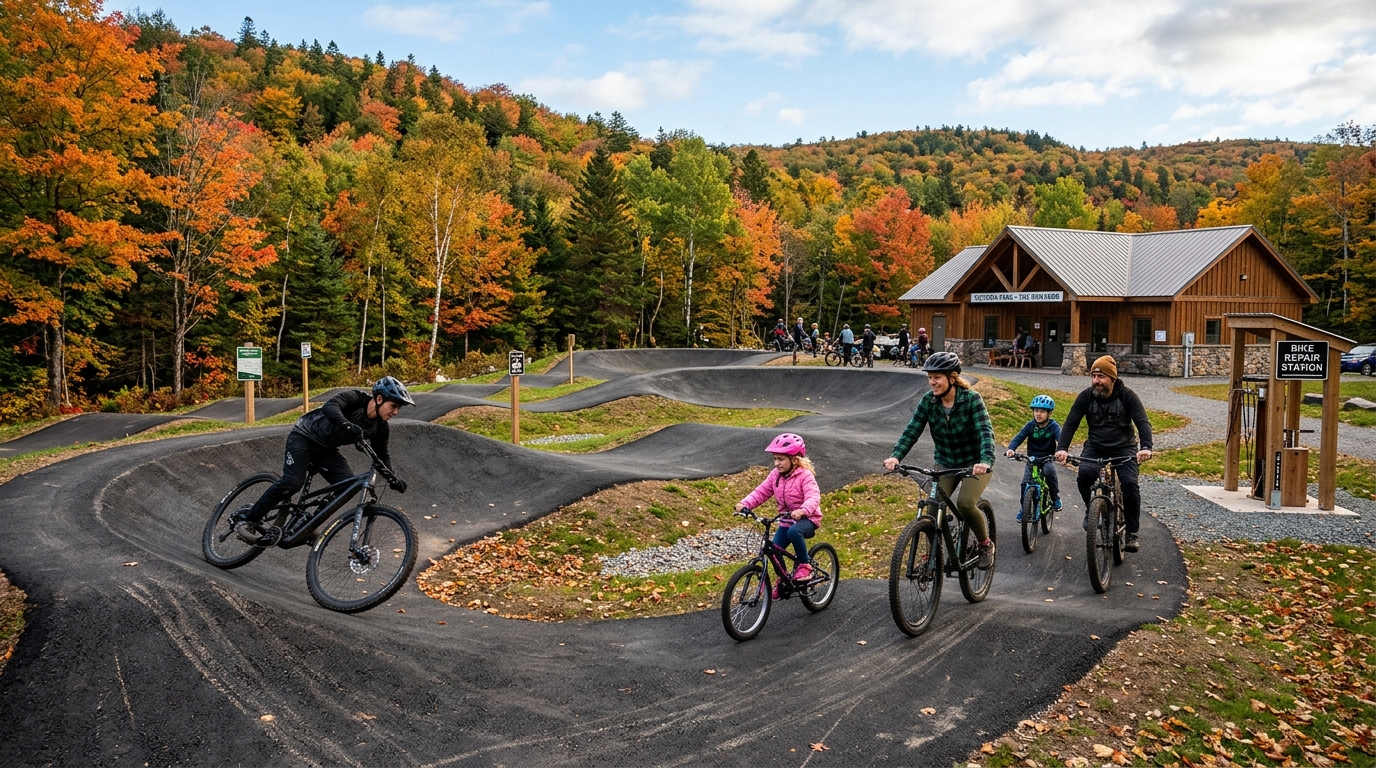
Unlike a private trail or an empty parking lot, a pump track is a shared, continuous circuit. At any given moment, you might be sharing the track with a young child on a balance bike, an experienced BMX rider working on speed, and a family testing out the layout for the first time.
Because everyone is moving through the same loop, small breaches of etiquette — stopping in the middle of a berm, riding in the wrong direction, or crowding another rider — can cause collisions even at relatively low speeds. Good etiquette isn't just politeness; it's a practical safety measure.
Basic Safety Gear
Requirements vary by facility, but the following gear is commonly recommended, and sometimes required, at pump tracks across Canada (with premier pump tracks in British Columbia and pump tracks in Alberta):
- Helmet: The single most important piece of safety equipment for any pump track session, for riders of all ages and skill levels.
- Closed-toe shoes with grip: Sandals or loose footwear increase the risk of a foot slipping off the pedal mid-lap.
- Gloves: Especially useful for BMX and mountain bike riders, both for grip and for protecting hands in a low-speed fall.
- Knee and elbow pads: Particularly recommended for younger or less experienced riders who are still building confidence and balance.
Always check posted signage at the entrance to a facility, since some municipalities require helmets by local bylaw, particularly for riders under a certain age.
Check the Track's Direction of Travel
Many pump tracks are designed to be ridden in a single, consistent direction to prevent head-on encounters between riders. This is usually indicated by arrows painted on the track or signage at the entrance.
Riding against the flow — even briefly, to session a specific feature — can create a serious collision risk, since faster riders behind you won't expect to encounter oncoming traffic. If you want to work on a particular section repeatedly, it's generally safer to complete a full lap and come back around rather than riding backward through part of the circuit.
Give Space and Time Your Entry
One of the most common causes of collisions on a pump track is entering too close behind another rider, or starting a lap while someone else is still navigating the section you're entering.
A simple habit that prevents most of these situations: pause at the entry point and visually check that the rider ahead of you has cleared enough distance before starting your own lap. On busier days, this might mean waiting a few extra seconds — a small cost compared to the risk of a mid-track collision.
Match Your Speed to the Track's Traffic
Pump tracks often attract a wide mix of riders, from young children just learning to balance to experienced riders carrying significant speed through the berms. Being aware of who else is on the track — and adjusting your own pace accordingly — is a core part of good etiquette.
If you're a confident, fast rider and notice younger or less experienced riders on the track, consider:
- Leaving extra space when catching up to a slower rider rather than closing the gap right behind them
- Choosing a quieter time of day to work on higher-speed laps
- Being patient if a beginner needs to stop mid-track, since new riders may not yet have full control over exactly where they come to a stop
What to Do If You Need to Stop Mid-Lap
Sometimes stopping mid-track is unavoidable — a young rider loses balance, or someone needs to reset after a fall. In these situations:
- Move to the side of the track as quickly and safely as possible, rather than stopping in the direct line of the berm or roller.
- If riding with a group, have one person signal to oncoming riders that someone has stopped ahead, if the situation allows for it.
- Get back into the flow of traffic only once you've checked that it's clear to do so, rather than pulling back onto the track without looking.
Riding with Children on a Pump Track
Pump tracks are popular with families precisely because they can accommodate a wide range of ages and skill levels at once, but this also means parents and guardians play an important role in overall track safety.
- Position yourself where you can see your child's full lap, particularly the first few visits to a new track.
- Teach basic track etiquette early — waiting for space before entering, not stopping mid-berm, and looking out for other riders — the same way you would teach general road or bike path awareness.
- Choose off-peak times for a child's first few sessions, when the track is less crowded and there's more room for mistakes while they build confidence.
Weather and Surface Conditions
Wet or icy conditions can significantly change how a pump track behaves, particularly berms, where reduced traction can turn a normally predictable turn into a slide. A few general precautions:
- On asphalt tracks, be cautious of painted lines or surface markings, which can become slippery when wet.
- On dirt tracks, moisture levels can dramatically affect grip — freshly watered dirt often rides very differently than dry, dusty conditions.
- In colder regions, check whether a facility is officially open for the season, since some tracks close for the winter or undergo resurfacing in early spring.
Basic Bike Maintenance Before You Ride
A pump track places repeated stress on a bike's suspension, tires, and brakes, and a mechanical issue mid-lap can be a safety hazard for both you and other riders. Before heading out, check:
- Tire pressure and tread condition
- Brake function, front and rear
- That the seat and handlebars are properly tightened
- Chain and drivetrain condition, particularly if you plan to pedal through parts of the track
Frequently Asked Questions
Ride Safely at a Pump Track Near You
Following basic safety practices and etiquette doesn't just reduce the risk of collisions — it also makes the track more enjoyable for the wide mix of riders who use these facilities every day, from beginners to experienced BMX and mountain bike riders.
Browse the findpumptracks.ca to find a pump track near you, check individual listings for any posted rules or amenities, and make safety and etiquette part of every visit.