How to Find the Best Pump Track Near You in Canada
Finding a pump track isn't always as simple as searching for the nearest location. Two tracks in the same region can offer completely different riding experiences, and the closest facility isn't necessarily the best choice for your age, bike, or skill level. Here's what to look for when choosing a pump track in Canada — and how to avoid driving out to a track that turns out to be the wrong fit.
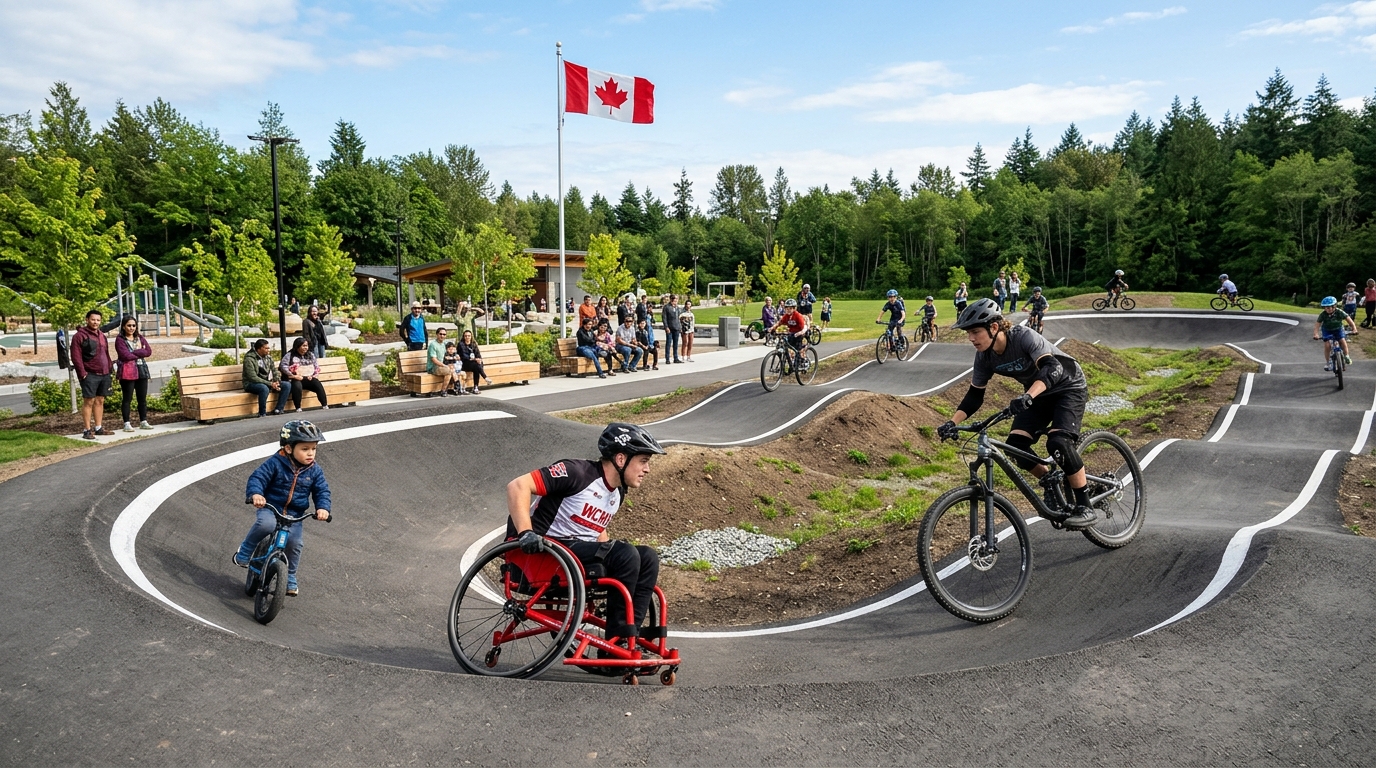
Start With Your Location
The first step is narrowing your search to a province and city.
Canada (with premier pump tracks in British Columbia and pump tracks in Alberta) has pump tracks in communities ranging from major metropolitan areas to small municipalities, and the number of facilities varies significantly by region. Searching geographically makes it much easier to find realistic options instead of scrolling through facilities hundreds of kilometres away.
The findpumptracks.ca organizes listings by province and city so you can move from a broad search down to individual locations in a few clicks, comparing options within a reasonable driving distance.
Check the Surface
Pump tracks are commonly built using different materials, and the surface can meaningfully change how the track rides and who it suits best.
Asphalt
Asphalt pump tracks offer a smooth, consistent riding surface and are generally suitable for BMX bikes, mountain bikes, and other permitted equipment. Asphalt is also usually rideable in more weather conditions and requires less seasonal maintenance, making it a popular choice for new municipal builds.
Dirt
Dirt tracks provide a different feel underneath the tires, with more traction variation depending on moisture and recent maintenance. Some riders prefer the more natural, forgiving surface, while others find it less predictable when dry or freshly watered.
Other Surfaces
Some facilities use modular or specialized construction systems, such as prefabricated composite panels. These are less common but growing in popularity for indoor or seasonal installations. If surface type matters to you, check the individual listing before travelling.
Look at the Track Layout
Track size isn't everything. A small pump track can be excellent for beginners or younger riders, while a larger circuit may offer more room for experienced riders to build speed and refine technique.
Pay attention to:
- Roller size and spacing
- Berm height and radius
- Track width
- Presence of jumps or step-ups
- Technical sections (rhythm sections, doubles)
- Overall circuit length
A beginner may prefer a predictable layout with gentle transitions and no jumps, while an experienced BMX or mountain bike rider may actively look for more challenging features to progress on. Photos on individual listings can give you a good sense of scale before you commit to the drive.
Check the Amenities
A good riding location isn't only about the track itself — especially if you're planning to spend more than a quick session there.
Depending on the facility, useful amenities may include:
- Parking
- Washrooms
- Drinking water
- Lighting (useful for evening sessions in shoulder seasons)
- Seating for spectators or parents
- Nearby playgrounds
- Other cycling facilities, such as a skills park or BMX race track
These details can be especially important for families planning a longer visit, or for anyone travelling from out of town who wants to make the most of the trip.
Read the Local Rules
Before riding, check what equipment is permitted and whether there are specific safety requirements posted at the facility.
Some locations may have rules concerning helmets, permitted bike or scooter types, operating hours, minimum age, or direction of travel during busy periods. A handful of municipal tracks also run scheduled sessions reserved for younger riders or beginners.
Rules can change over time, so information in a directory should be treated as a helpful starting point rather than a substitute for the signage posted at the facility itself.
Consider the Season
Canadian weather can dramatically affect outdoor riding, and this is one of the most overlooked factors when planning a visit.
A pump track in pump tracks in British Columbia may have a very different riding season from one in Manitoba, Alberta, or Yukon. Snow, rain, freezing temperatures, and seasonal maintenance closures can all affect accessibility for several months of the year.
If you're travelling specifically to ride, it's worth checking recent local conditions or reviews before making the trip — a track that looks great in a summer photo may be closed for resurfacing or covered in snow depending on the time of year.
Compare More Than One Track
If several pump tracks are within driving distance, it's worth comparing them rather than automatically choosing the closest one.
For example, one facility may be better suited to young children learning the basics, while another offers a longer asphalt circuit built for intermediate and advanced riders. A third might be located beside a playground, a skatepark, or another cycling facility, making it a better option for a family outing.
The right choice ultimately depends on what you want out of the session — a quick beginner-friendly loop, a longer technical ride, or a family day out with multiple activities nearby.
Reading Reviews and Ratings Effectively
Ratings can be a useful shortcut, but it helps to read a few reviews rather than relying on the star rating alone. Look specifically for comments about:
- Surface condition and recent maintenance
- Crowding at particular times of day
- Whether the track suits beginners, intermediate riders, or both
- Parking availability, especially at smaller municipal locations
A track with a slightly lower average rating but detailed, positive comments about beginner suitability may be a better match than a higher-rated but more advanced facility.
Frequently Asked Questions
Find Pump Tracks Across Canada
Our directory brings together pump tracks from across Canadian provinces and territories and lets you browse them by location. Start with your province, choose a city, and open individual listings to compare surface type, layout, amenities, and ratings.
Whether you're looking for an asphalt pump track near you, a family-friendly riding facility, or a place to practise BMX skills, a little research before you leave can help you find a much better match — and make the most of your time at the track.