How to Choose the Right Pump Track for Your Skill Level
Finding a pump track is easy. Finding the right pump track is a little more complicated.
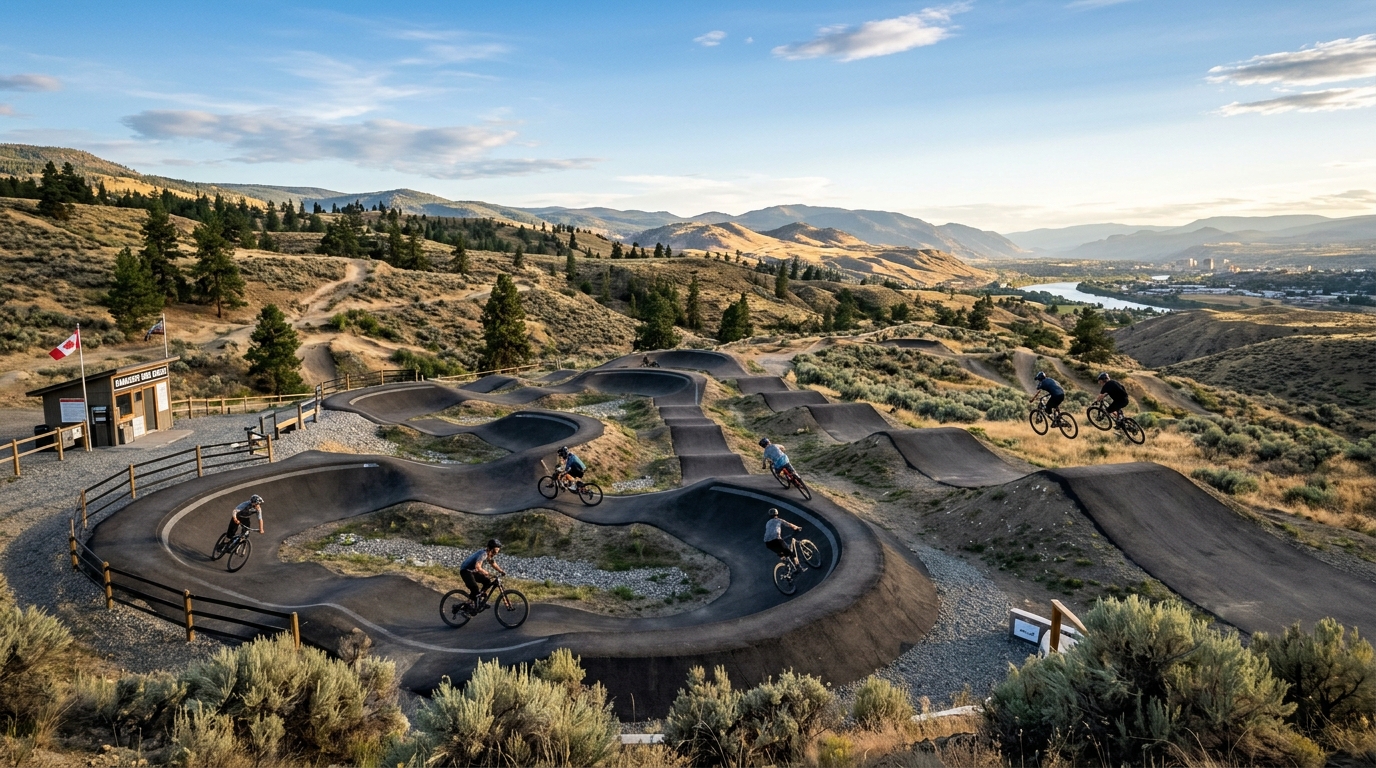
A search for "pump track near me" may return several options across pump tracks in British Columbia and pump tracks in Alberta, but distance alone doesn't tell you whether a particular facility will be enjoyable for a beginner, suitable for children, or challenging enough for an experienced rider.
Pump tracks can differ in surface, layout, roller size, berm design, available features, permitted equipment, surrounding amenities, and overall riding environment.
The best facility for one rider may be completely unsuitable for another. Reviewing premier regional pump tracks in Ontario or pump tracks in Quebec can help you compare available circuits.
Instead of looking for a universal "best pump track," it makes more sense to find the facility that matches your goals, equipment, experience, and expectations.
Here's how to make that decision. For beginners, review our foundational guide on pump track riding for beginners.
Start With Your Riding Experience
The first question is simple:
How comfortable are you on your equipment?
A complete beginner who is still developing basic balance and steering skills has different needs from an experienced BMX rider looking for technical features.
Think about which description fits you best.
Complete Beginner
You are comfortable riding your bike or scooter on normal surfaces but have never used a pump track.
You want to learn how rollers and berms work without feeling overwhelmed.
Developing Rider
You've already used a pump track and can manage basic rollers and turns.
You want to improve your technique and become more confident.
Experienced Rider
You're comfortable with speed, berms, rollers, and more demanding riding.
You may be looking for technical features or a layout that gives you opportunities to progress.
Your experience level should influence the type of facility you choose.
Consider Who Is Coming With You
The best track for a solo rider isn't necessarily the best track for a family.
If you're visiting with children, think about their age, equipment, confidence, and ability to control speed.
A young child may benefit from a simpler layout with smaller features.
An experienced teenager may prefer a more challenging facility.
If multiple family members have different skill levels, look for a location that offers enough space or variety for everyone to enjoy the visit.
Don't assume that a track described as suitable for bikes is automatically suitable for every child.
Check the facility's information and rules.
Look at the Surface
Surface type can influence the riding experience.
Asphalt and dirt are among the surfaces found on pump tracks, while some facilities use other construction methods.
The important thing isn't deciding that one material is universally "best."
It's understanding what type of riding experience you prefer.
Asphalt
Asphalt provides a hard, consistent surface.
For many riders, this can make the behaviour of the bike more predictable.
It can also be relatively easy to maintain compared with surfaces that are more affected by moisture and erosion.
However, weather conditions can still affect an asphalt track. Rain, ice, snow, or other conditions may make riding inappropriate.
Dirt
Dirt pump tracks have a different feel.
The condition of the surface can change depending on weather and maintenance.
Some riders enjoy the character of riding on dirt, while others prefer the consistency of a paved surface.
If you're considering a dirt facility, check current local information and conditions before travelling.
Other Surfaces
Some pump tracks use specialized or modular construction.
If the surface is important to you, use the information available on the individual listing rather than assuming all pump tracks are built the same way.
Examine the Roller Size
Rollers are fundamental to a pump track.
Their size and spacing can have a significant effect on how approachable the circuit feels.
For a beginner, smaller and more predictable rollers may be easier to understand.
Larger rollers can require more confidence and more deliberate body movement.
However, there isn't a universal definition of what makes a roller "beginner" or "advanced."
The overall layout matters as much as individual features.
Photos can be useful here.
Look at the scale of the rollers relative to riders, bikes, or surrounding features when such images are available.
Look at the Berms
Berms are another important part of a pump track.
A wide, gently banked turn can feel very different from a narrow or steep berm.
Beginners often feel more comfortable when they have plenty of room to understand the line through a corner.
More experienced riders may actively look for steeper or more challenging turns.
Again, don't judge a track based on one feature alone.
The combination of rollers, berms, transitions, and available space determines the overall riding experience.
Think About Jumps and Technical Features
Not every pump track is designed primarily for jumps.
Some layouts are relatively simple.
Others may include jumps, step-ups, rhythm sections, or additional technical features.
If you're a beginner, don't assume that more features automatically means a better track.
A technically demanding facility may actually be less enjoyable if you're still learning the fundamentals.
If you're an experienced rider, however, a more varied layout may give you more opportunities to work on advanced skills.
Choose according to your current ability rather than the number of features listed.
Check the Track Width
Track width can affect how comfortable a facility feels when multiple people are riding.
A wider layout may provide more room for different riding lines, while a narrower circuit can feel more demanding when traffic increases.
This is particularly relevant if you're visiting with children.
Look at available photographs and descriptions when possible.
If the track looks narrow and busy in recent user images, you may want to choose a quieter time to visit.
Consider the Overall Layout
A pump track can be compact while still offering a varied riding experience.
Instead of focusing only on total size, look at how the track is arranged.
Ask:
- Is there a clear circuit?
- Are the turns easy to understand?
- Are there areas that look particularly technical?
- Are there multiple lines?
- Does the layout appear appropriate for beginners?
- Is there room to slow down safely?
You don't need technical knowledge to evaluate these things.
Photos can give you a useful first impression.
Think About Traffic
The same pump track can feel completely different when it's quiet versus when it's crowded.
A beginner may enjoy a popular facility much more during a quieter period.
An experienced rider may be comfortable in heavier traffic.
When researching a location, look for user comments that mention busy periods, family use, or overall traffic.
Remember that reviews are personal experiences rather than guarantees.
Conditions can change from one day to another.
Don't Ignore the Surrounding Amenities
A pump track visit isn't always just about riding.
For families, surrounding amenities can make a major difference.
Depending on the facility, you may find:
- Parking
- Washrooms
- Drinking water
- Seating
- Playgrounds
- Other recreational facilities
- Skateboarding areas
- Cycling facilities
- Walking paths
Not every pump track will offer these amenities.
That's why individual location listings are useful.
If you're travelling with children, checking the surrounding facilities before leaving can help you plan the entire outing rather than just the riding session.
Consider the Distance
The closest pump track isn't automatically the best.
But the most distant one isn't automatically better either.
For regular practice, a nearby facility may be much more useful because you can visit frequently.
For a special weekend trip, travelling farther may make sense if the facility offers the type of riding experience you're looking for.
Think about how often you expect to visit.
If you're planning to ride once a month, convenience may be important.
If you're planning a dedicated riding trip, the layout and features may matter more.
Check Equipment Restrictions
This is one of the most important things to verify before travelling.
Not every pump track necessarily permits every type of equipment.
Depending on the location, rules may apply to:
- BMX bikes
- Mountain bikes
- Balance bikes
- Scooters
- Skateboards
- Other equipment
Don't rely on photographs alone.
Check the individual facility information and posted rules.
This is particularly important for families where different people may be bringing different equipment.
Check Helmet Requirements
Helmet rules can vary.
Some facilities may require helmets or establish specific safety requirements.
Always check before visiting.
Even when a particular piece of equipment is not explicitly required, appropriate protective gear remains an important consideration for your own riding.
Think About the Season
Canadian weather makes seasonal planning particularly important.
Outdoor pump tracks can be affected by:
- Snow
- Ice
- Rain
- Freezing temperatures
- Seasonal maintenance
- Temporary closures
A facility that is perfect for a summer outing may not be appropriate during winter conditions.
Before making a longer trip, check current information rather than relying solely on an old photograph or review.
Use Photos Properly
Photos can tell you a lot about a pump track, but they also have limitations.
Look for overall layout, roller proportions, berm shape, surface, surrounding space, nearby amenities, and riding environment.
Try to find multiple photos rather than judging a location from one image.
Also remember that a photograph represents a particular moment.
The current condition may be different.
Read Reviews for the Right Information
Don't read reviews only to find the star rating.
Look for specific comments. For example: Is the surface well maintained? Is the facility suitable for younger riders? Does it become crowded? Is parking convenient?
Build Your Own Shortlist
If several pump tracks are available near you, don't try to decide immediately. Create a shortlist of three or four locations and compare them.
| Factor | Track A | Track B | Track C |
|---|---|---|---|
| Distance | Short | Medium | Long |
| Surface | Asphalt | Dirt | Asphalt |
| Beginner suitability | Check | Check | Check |
| Kids | Check | Check | Check |
| Amenities | Check | Check | Check |
| Equipment rules | Check | Check | Check |
| Photos | Available | Available | Available |
Choose Based on Your Goal
Your goal should ultimately determine your choice.
If you're learning
Prioritize manageable rollers, comfortable turns, predictable layout, lower traffic when possible.
If you're riding with children
Prioritize appropriate features, permitted equipment, safety requirements, nearby amenities, comfortable riding environment.
If you're improving your skills
Look for variety, more challenging rollers, different berms, opportunities to practise technique.
If you're an experienced rider
You may prioritize technical features, larger or more demanding sections, variety of lines, a layout that allows progression.
There is no single definition of the perfect pump track. The right choice depends on what you want to accomplish.
When a Smaller Track Is the Better Choice
A larger facility may sound more impressive, but bigger isn't automatically better. A compact track can be ideal for beginners, short practice sessions, young riders, learning basic pumping, and building confidence.
When a Larger Track Makes Sense
A larger or more complex facility may become attractive as your skills improve. However, don't travel specifically for a challenging track unless you're reasonably confident that the difficulty matches your ability.
Don't Confuse Popularity With Suitability
A highly rated or frequently visited pump track isn't automatically the right choice for you.
Verify Important Information Before Leaving
Before a longer trip, confirm the facility is open, your equipment is permitted, you understand local rules, weather is appropriate, and address is correct.
Use the Directory to Compare Locations
The findpumptracks.ca is designed to make that discovery process easier. Start with your location, narrow your options, and open individual listings.
Frequently Asked Questions
Find the Right Pump Track Near You
Choosing a pump track isn't about finding the biggest, newest, or highest-rated facility.
It's about finding a place that fits you.
A beginner may benefit from a simple layout close to home. A family may prioritize amenities and a comfortable environment. An experienced rider may prefer more demanding features and greater variety.
Use the findpumptracks.ca to explore facilities by province and city, compare individual locations, and research the details that matter before you travel.
The better the match between the rider and the facility, the more useful — and enjoyable — the session is likely to be.